

Hedge Calculator
Already have a bet riding? See how much to put on the other side to lock in the same result either way, or just to get your stake back.
How Hedging Works
A hedge is a second bet on the opposite outcome of a bet you already hold. If the first bet wins, the hedge loses, and the other way round. Sized right, it locks in a result whichever side wins, as long as both bets are settled as placed.
Same Result Either Way
To make both outcomes pay the same, the hedge is the original stake times the original decimal odds, divided by the hedge's decimal odds. With $20 on a +600 parlay and the other side of the last leg at -150, that is $20 × 7.00 ÷ 1.667 = $84. Either way you finish $36 up.
Break Even
If you only want your stake back when the hedge wins, the hedge is the original stake divided by the hedge's decimal odds minus 1. In the same example that is $30. If the original wins you keep $90; if the hedge wins you finish even.
The Cost of Hedging
Hedging trades upside for certainty. The hedge carries the sportsbook's margin like any bet, so on average it costs a little. It makes the most sense when the amount riding matters to you, like the last leg of a big parlay.
Parlays with One Leg Left
Enter the whole parlay's stake and odds as the original bet, and the opposite side of the last leg as the hedge. If more than one leg is still open, hedging gets more complicated, so compare the outcomes row by row.
Same-Result Hedge
Original stake × original decimal ÷ hedge decimal
Break-Even Hedge
Original stake ÷ (hedge decimal − 1)
If the Original Wins
Original stake × (original decimal − 1) − hedge
If the Hedge Wins
Hedge × (hedge decimal − 1) − original stake
Worked Example: $20 at +600, Hedge at -150
Same result: hedge $84.00, +$36.00 either way
Break even: hedge $30.00, +$90.00 or $0.00
Hedging a $10 Parlay at +1200
One leg left. What the hedge costs and locks in, depending on the price of the other side.
Before You Hedge, Look at the Leg.
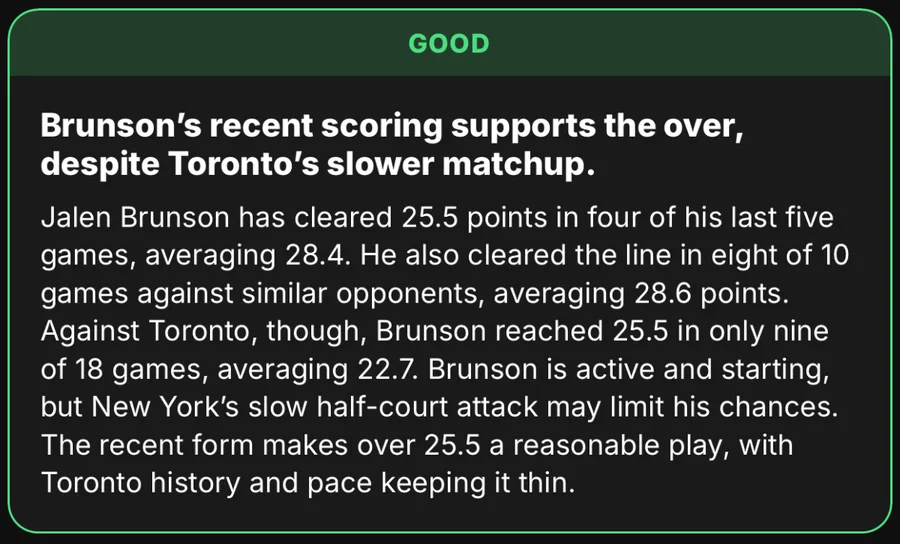
Goated's AI verdict reads the matchup, recent form and line movement on any prop and calls it GOOD, ADJUST or PASS, with the reasoning.


Free for 3 days. 21+.
Hedging Questions
How much should I hedge?
It depends on the result you want. The same-result hedge locks in an equal outcome either way. The break-even hedge only protects your stake. Anything in between keeps more upside with less protection; enter your own amount to compare.
When does hedging make sense?
When locking in a result matters more to you than the average outcome, for example when a big parlay comes down to one leg. Over time hedges cost a little, because the hedge carries the sportsbook's margin.
Can hedging lock in a loss?
Yes. If the hedge price is poor or the original odds are short, the same-result plan can lock in a small loss. The calculator shows it in red.
Can I hedge at a different sportsbook?
Yes. The best price on the other side is often at another book, and the math is the same.
Is a cash-out the same as a hedge?
It is a similar idea: the sportsbook offers to settle your bet early for a set amount. Compare the cash-out offer with what the same-result hedge locks in here, and take whichever pays more.